

Two UD students from the Faculty of Engineering did exceptionally well at the WorldSkills international competition held in China. As representatives of Hungary in the industrial robotics category at this world championship of skills, Dániel Vígh and Károly Árpád Kis became the second-best team from Europe.
News

The limitations of artificial intelligence, a sustainable future, and new dimensions of human-animal relationships were among the topics discussed at the Faculty of Education for Children and Special Educational Needs at the University of Debrecen on October 6 and 7. Celebrating its fifth anniversary, the International Anthrozoology Conference hosted 71 speakers from Hungary and abroad this year, who shared their latest research findings across 14 different sessions covering almost every branch of the social and natural sciences.
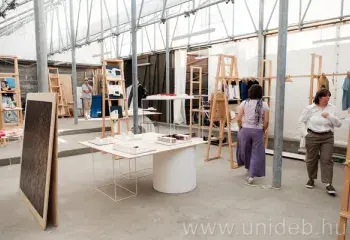
The renovation project of “The Dryer Workshop”, located on the street Szombathi István, has achieved remarkable success in a prestigious international architectural competition. The building, which had been formerly used for drying animal hides, was remodeled just over two years ago and is now used as a studio facility by the Department of Architecture at the Faculty of Engineering of the University of Debrecen.
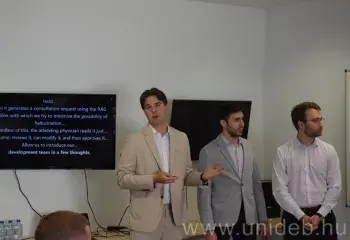
Innovative and multidisciplinary applications of artificial intelligence took center stage at the DEIK.AI Challenge 2026 student competition, organized by the Faculty of Informatics at the University of Debrecen with support from the Innovation Ecosystem Center. The finals of the first stage of this multi-stage competition—the AI Idea Competition—were held at the Faculty of Informatics.

Four faculty members and researchers from the University of Debrecen’s Faculty of Engineering and Faculty of Informatics recently completed a study tour in Italy’s famous Motor Valley. The primary objective of their visit was to conduct an in-depth, engineering-focused study of the unique design, materials science, aerodynamics, and powertrain technology solutions in premium motorcycles, super-sports cars and Formula 1 race cars.
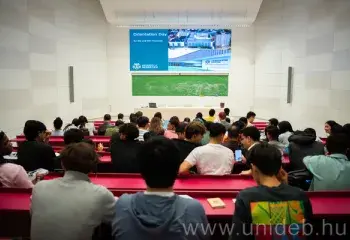
The Orientation Day held at the Faculty of Engineering of the University of Debrecen focused on introducing the mandatory academic administrative procedures for first-year international students. The presentations delivered in English on this day covered topics like the infrastructure of the faculty, the way to register for courses in the Neptun system, and the introduction of an overview of the web-based systems at our university.
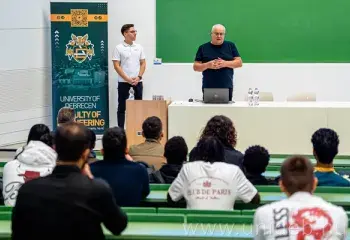
An elective course covering the operation of batteries and the fundamentals of their manufacturing technology is launched jointly by the Faculty of Engineering at the University of Debrecen and EVE Power Hungary Kft. Students from all faculties of the university can sign up for this one-semester program until September 20.
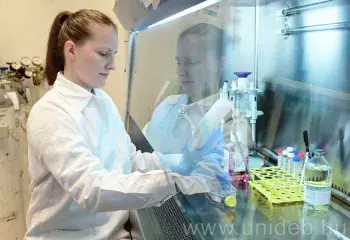
A bile acid naturally present in the body (ursodeoxycholic acid) may contribute to the growth, spread, and metastasis of ovarian tumors, according to a study by researchers at the University of Debrecen. This finding is significant because previous studies on this substance had only demonstrated anticancer effects. The research highlights that substances produced by gut bacteria can affect different types of tumors in varying ways. The researchers have received the Publication Award from the University of Debrecen and the Count István Tisza Foundation for the University of Debrecen for their paper presenting these findings.

A form of vitamin D significantly reduced a dangerous inflammatory reaction associated with leukemia in laboratory studies, according to research by scientists at the University of Debrecen. This finding could lead to the development of new adjunctive treatments in the long term, but for now, vitamin D is not a substitute for life-saving steroid therapy. The researchers reported their findings in a prestigious international medical-biological journal, and their article has now been recognized with the Publication Award from the University of Debrecen and the Count István Tisza Foundation for the University of Debrecen.
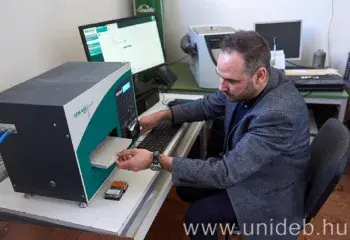
The general properties and the resistance of so-called aerogel materials, which are increasingly used in the construction, automotive, aerospace and oil industries, have been tested at the Faculty of Engineering of the University of Debrecen. The consequent findings of our researchers may contribute to further growth in the application of aerogels.